Menu
Why Native Tree Species Are Best for West New York Yards
Tree Planting West New York
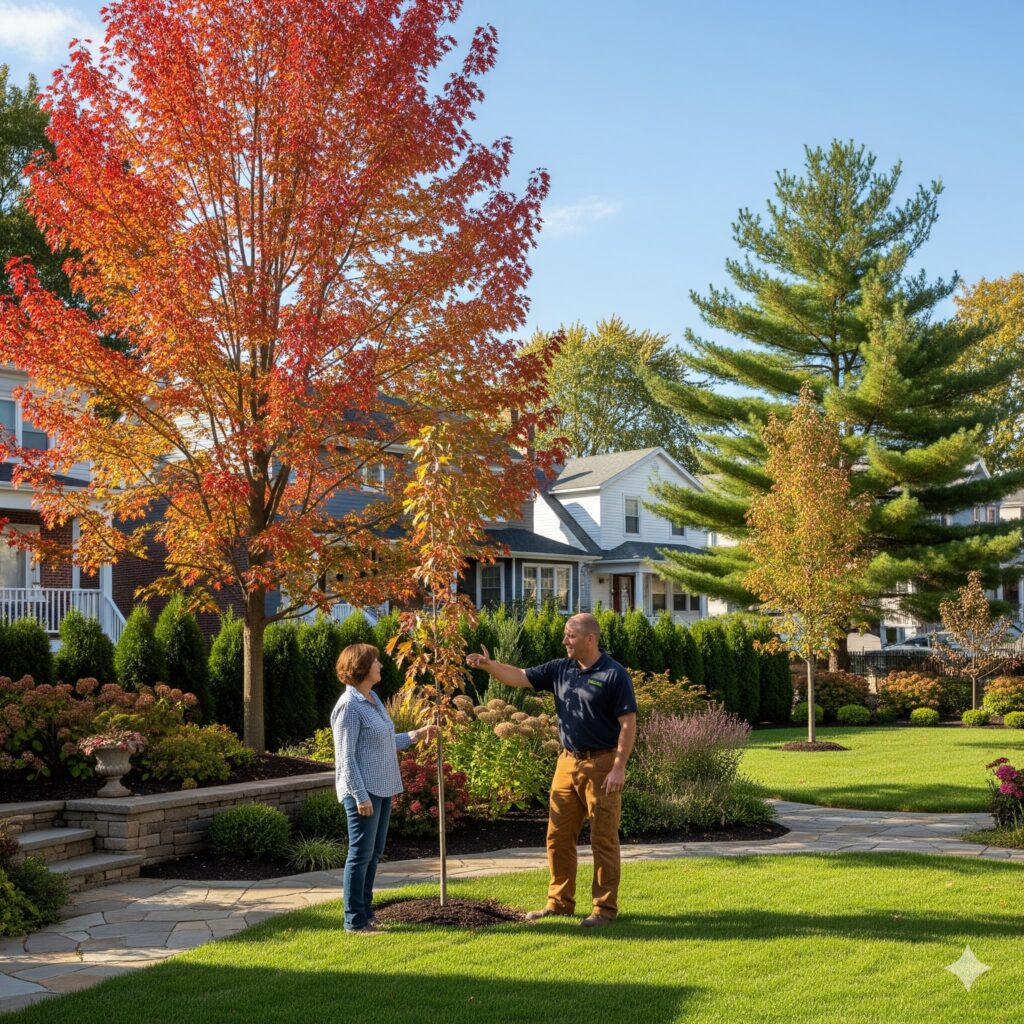
Selecting suitable trees to be planted on properties in West New York, NJ, involves understanding the distinct benefits that plants native to this area have as compared to plants native to other areas. Due to the challenges of planting trees in the urban setting along Boulevard East and throughout Hudson County, decisions regarding tree planting can significantly affect how well a landscape will perform long term, the cost of maintaining the landscape, and overall ecological benefit. Plants native to New Jersey were adapted specifically for New Jersey’s climate, soil conditions, and relationships with the ecosystem; therefore, these are the best choice when developing sustainable urban landscapes that support both property value and public health.”
Understanding New Jersey’s Native Tree Heritage
Regional Ecological Context
West New York is located in two of New Jersey’s most unique and varied ecoregions, the Northeastern Highlands and Northern Piedmont. In addition to the variation of the terrain, which includes rolling hills and a variety of soil types, the temperate climate in the region has created a variety of growing conditions in which native trees have grown for centuries. Therefore, native trees in the Northeastern Highlands and Northern Piedmont have formed complex relationships with their local soils, rainfall patterns, seasonal fluctuations of temperature, and native wildlife populations.
Before European settlement, the area now known as West New York was covered with a variety of forest types; the dominant forest type was the oak-hickory forest. Within the oak-hickory forest were many understory species that created a base for today’s recommended native trees for use in the region. Therefore, to preserve the natural history of the region when selecting trees for planting, property owners near James J. Braddock Park would do well to consider this prior history.
Long-term Adaptability to Local Growing Conditions
Native trees are naturally adapted to grow in the same conditions that exist in West New York. Therefore, they are better equipped to withstand the urban stresses of compacted soils, air pollution, and limited root space that non-native trees face. The result of this long-term adaptation is that native trees will require less maintenance, grow faster, and have a greater chance of surviving in urban settings than non-native trees.
As a result of their long-term adaptation to the growing conditions in the region, native trees are better equipped to survive in the urban setting of West New York.
Recommended Native Trees for the Region of West New York
Red Oak (Quercus rubra) – NJ’s Official State Tree
Red Oak is an excellent choice for planting in West New York, particularly in properties with enough space. This fast-growing species provides considerable shade with mature sizes reaching 60-75 feet tall and 40-50 feet wide. Red Oaks also display vibrant fall colors that range from a light russet to a bright red that enhances the appearance of properties during autumn.
In addition to its aesthetic qualities, Red Oaks also supports an abundance of wildlife. For example, the trees provide food for over 500 species of butterflies and moths, and the acorns produced by the trees are consumed by birds and mammals.
Although Red Oaks are tolerant of the urban conditions found in West New York, they still require sufficient space to allow for healthy root development. Therefore, properties along Bergenline Avenue with larger backyards are suitable locations for planting these majestic trees that will provide decades of beauty and environmental benefits.
Eastern White Pine (Pinus strobus)
While some species of pine trees are considered invasive in certain parts of North America, Eastern White Pine is native to the region and provides year-round evergreen color that can be used as either a specimen tree or a screen tree for West New York properties. Eastern White Pines can grow up to 100 feet tall in ideal conditions, although the typical size of urban trees will be much shorter. The soft, blue-green needles of the White Pine create a beautiful textured contrast against the backdrop of deciduous species, and provide additional interest and wildlife habitat during the winter months.
One of the primary benefits of using Eastern White Pine as part of your landscape design is that it grows rapidly. In fact, White Pines are capable of adding up to 36 inches of growth per year when young. Therefore, if you are looking to quickly create a screen or add shade to a portion of your property, Eastern White Pine is a great option. Additionally, White Pines are adaptable to a wide range of soil types and provide nesting sites for a variety of bird species while producing seeds that are eaten by wildlife.
Flowering Dogwood (Cornus florida)
Flowering Dogwood is another popular native tree that can be used in West New York. Flowering Dogwood is a small to medium-sized tree that is ideally suited for urban properties with limited space. With a mature height of 20-30 feet and an equal spread, Flowering Dogwood produces stunning white or pink flowers in the spring and attractive red berries in the fall that attract birds and other wildlife. Additionally, Flowering Dogwood displays excellent fall color with leaves changing to brilliant shades of red to purple.
Due to its preference for partial shade, Flowering Dogwood is best planted underneath larger canopy trees or in areas of your property that receive morning sun and afternoon shade. Flowering Dogwood also provides early-season nectar for beneficial insects and acts as a host plant for spring azure butterflies. Therefore, properties near Donnelly Memorial Park are prime locations for planting Flowering Dogwood as an understory tree that complements the larger native canopy species and provides multiple seasons of interest.
American Arborvitae (Thuja occidentalis)
For West New York property owners looking to create a screen or block out unwanted views, American Arborvitae is an excellent option. American Arborvitae is an evergreen native to the region that will grow to 40-60 feet in height with a narrow, pyramidal shape that works perfectly in tight urban spaces. The scale-like foliage of American Arborvitae provides a solid barrier of greenery year-round and requires very little maintenance once established.
American Arborvitaecano grow in a variety of soil conditions and demonstrates good tolerance for urban pollution. Therefore, it provides excellent habitat for nesting birds and serves as a protective winter shelter for a variety of wildlife species. Therefore, properties with tight spaces or those needing a tall, thin screen should consider the benefits of using American Arborvitae in their landscape design.
Environmental Values Provided by Native Trees
Urban Air Quality Improvement
Native trees provide improved air quality in urban areas such as West New York through their adaptation to local pollution levels and optimal growth habits. Established native trees filter more air pollutants per unit of leafy canopy coverage than stressed non-native trees, since native trees retain their leafy canopies better and have more extensive root systems than stressed non-native trees. Additionally, the natural pest resistance of native trees eliminates the need for chemical treatments that can reduce the effectiveness of native trees in improving air quality.
Additionally, large canopy native trees such as Red Oak and Sugar Maple remove a significant amount of particulate matter from the air and produce oxygen through photosynthesis. In fact, a mature native canopy tree can remove up to 48 pounds of CO2 from the atmosphere and filter up to 15,000 gallons of water per year, providing significant environmental benefits over the decades that native trees typically live longer than non-native trees and grow healthier.
Stormwater Management
Native trees provide significant stormwater management benefits for West New York property owners through their root systems and canopy features. Native trees develop extensive, deep root systems that effectively absorb and filter rainwater, and reduce runoff that can overwhelm urban drainage systems. Native trees also have canopies that maximize water retention during storms, based on local rainfall patterns.
Therefore, property owners who incorporate native trees into their landscape design experience reduced risk of flooding, improved soil stability, and reduced erosion problems. In addition, native tree roots improve water infiltration into the soil, which recharges local groundwater and filters pollutants from stormwater runoff. These environmental benefits of native trees are particularly valuable in dense urban areas where high concentrations of impervious surface create excessive runoff.
Wildlife and Ecosystem Values Provided by Native Trees
Native trees provide a variety of ecosystem and wildlife values that non-native species cannot match. Native trees are home to a diverse array of wildlife, including insects, birds, and mammals, that utilize native trees for food, shelter, and breeding.
In fact, studies indicate that native trees support 100 times more wildlife than non-native trees, and therefore are essential for establishing wildlife corridors in urban ecosystems. Therefore, property owners in West New York who select a diverse group of native tree species create wildlife corridors that link larger preserved areas and allow wildlife to move through urban ecosystems.
Pollinator Support
Native trees also provide critical nectar for pollinators, including bees, butterflies, and other insects, at a time when flowering plants may be scarce. Many species of native trees, such as Red Maple, provide nectar early in the spring and late in the fall, providing critical resources to pollinators during times of the year when alternative nectar sources may be lacking.
In addition, many species of native trees serve as host plants for specific insects that require the presence of a particular tree species to complete their life cycle. These relationships have been developed over thousands of years and cannot be replicated by non-native trees. Therefore, property owners who select a diverse group of native tree species will provide pollinator conservation benefits while also benefiting from increased pollination of their gardens and landscaped areas.
Economic Values of Native Trees
Maintenance Savings
Native trees require significantly less maintenance than non-native trees after they become established. Therefore, property owners can save money on maintenance costs, including pruning, fertilization, and pest control, for a longer period of time. According to the US Forest Service, native trees require approximately 25% of the maintenance of non-native trees. Therefore, property owners can expect to save money on maintenance costs over the long term.
Increased Property Values
Native trees increase the value of properties through improved aesthetics, reduced energy consumption, and a demonstration of environmental stewardship. Mature native trees provide significant shading that reduces the amount of energy required for cooling in the summer, while the windbreak provided by the trees reduces the amount of energy required to heat homes in the winter.
Native trees are seen as a sustainable investment by environmentally conscious homebuyers, and therefore, can command a premium price. Property owners in West New York who incorporate a diverse group of native trees into their landscape design will not only reap the rewards of environmental stewardship but will also see an increase in their property values.
Overcoming Urban Challenges with Native Species
Compacted Soils and Limited Root Space
Urban soils pose a variety of challenges, including soil compaction, soil contamination, and limited root space, that native trees are better equipped to handle than non-native trees. Native trees have evolved methods to deal with difficult soil conditions and typically develop stronger and more extensive root systems that can more easily break through compacted soils. Furthermore, native tree root architectures are specifically designed to maximize the absorption and utilization of nutrients and water from the surrounding soil.
Tree planting professionals can combine soil modification techniques with the inherent benefits of native tree characteristics to create optimal growing conditions that promote successful establishment and long-term performance of native trees in challenging urban sites.
Air Pollution Tolerance
Native trees are generally better able to tolerate the air pollution found in urban areas than non-native trees. This is because native trees evolved in response to the natural variations in air quality and have developed genetic adaptations that enable them to metabolize atmospheric contaminants. Additionally, the physiological systems of native trees tend to perform better under pollution stress than those of non-native trees.
When selecting species for planting in urban areas, consideration should be given to the level of pollution each location receives. For example, trees planted in proximity to major highways will likely require different characteristics than those planted in more remote locations. Professionals with knowledge of tree planting can assist in identifying the best combination of native tree species for meeting air quality objectives in specific urban environments.
Creating a Native Tree Landscape
Conducting Site Assessments and Selecting Appropriate Tree Species
To begin developing a native tree landscape, a thorough site assessment must be completed to determine factors such as sunlight availability, soil quality, available space, and desired landscape functionality. Different native species require varying degrees of sunlight, soil quality, and space; therefore, it is essential to correctly match the species to the site. Before selecting native tree species, property owners should assess the existing drainage patterns, proximity to buildings and other structures, and the location of utilities.
Consulting with a professional can aid property owners in determining the mature characteristics of native tree species and in planning for future development of the landscape. Tree Care Pros West New York has the knowledge and experience to aid property owners in selecting the right combination of native tree species to meet both short-term and long-term landscape goals.
Timing of Planting and Post-planting Care
The optimal time to plant native trees in West New York is usually during the fall or early spring when temperatures are moderate and precipitation is more consistent. By planting native trees at this time, the trees will be able to develop a strong root system prior to experiencing stressful summer temperatures.
In addition to selecting the right species, post-planting care is also necessary to ensure the long-term success of native trees. Adequate watering, mulching, and protection from mechanical injury will help native trees establish themselves and grow into healthy trees.
While native trees generally require less care than non-native trees, they still require proper establishment care to encourage deep root development and structural growth. Consulting with a professional arborist can provide property owners with the guidance needed to provide the best possible care for newly planted native trees.
LATEST POSTS