
Menu
DIY Stump Grinding Risks: Leave It to Arborists
Stump Grinding West New York
Homeowners in West New York who have had trees removed from their property may find themselves with unattractive stumps on their lawn after the removal of the tree. Many homeowners feel they can accomplish stump grinding by renting equipment and attempting the job as a weekend project. Stump grinding is a hazardous activity; requires specific technical knowledge; and utilizes heavy, high-tech equipment that would not be safe or practical for many homeowners. Knowing the potential risks associated with stump grinding will allow residents who live along Bergenline Avenue and throughout Hudson County to make an educated decision regarding hiring a professional arborist for stump grinding.
The Hidden Dangers of DIY Stump Grinding
Equipment-Related Injuries
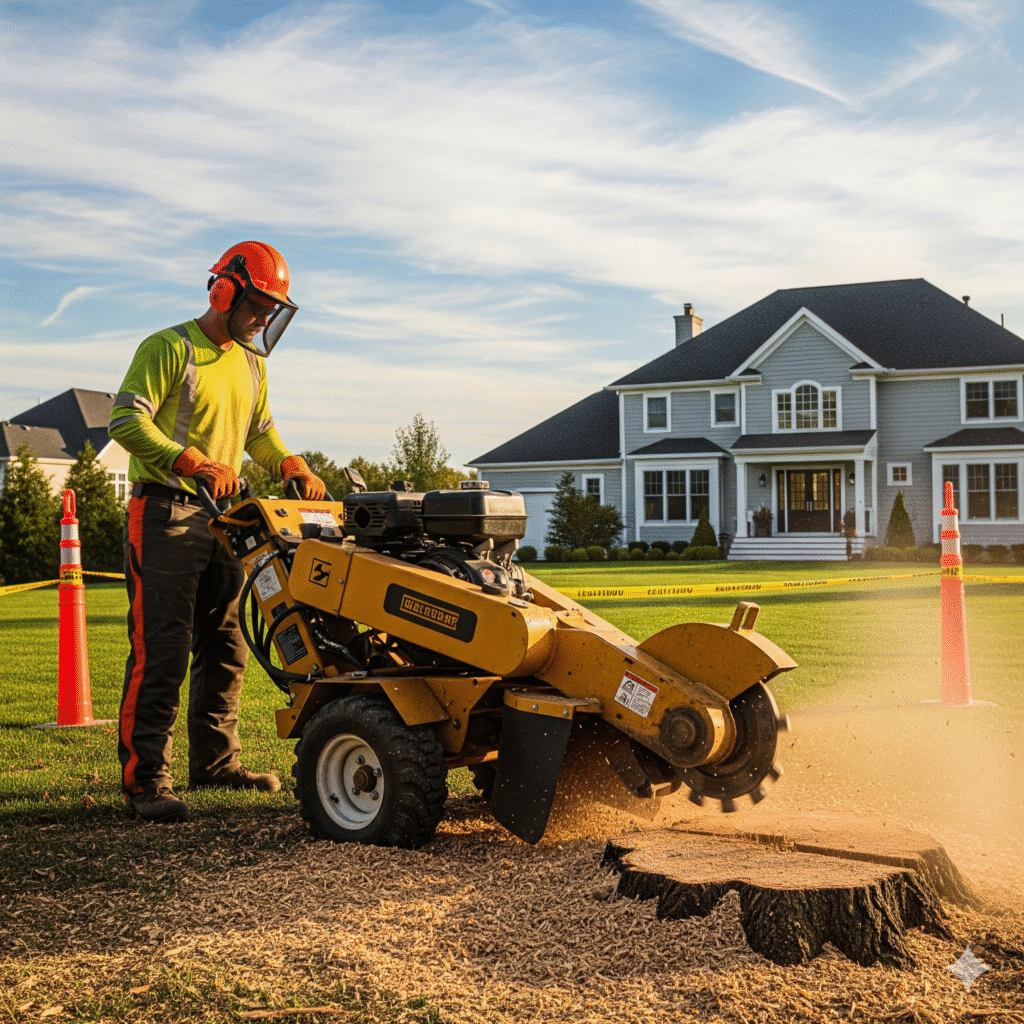
Stump grinders are very heavy-duty machines that have a rotating cutting wheel that spins at extremely fast speeds. These machines have features like emergency-stop buttons, guards, and warning systems to protect the operator from accidents. If an operator does not receive adequate training, he/she will have many serious risks of being injured by a laceration, having his/her eyes injured by flying debris, and being crushed by improper handling of the machine. Debris thrown by the cutting wheel can go over 100 miles per hour and create hazardous projectiles within a 75-foot radius.
Utility Lines
There are numerous underground utility lines located beneath many of the homes in West New York, especially near James J. Braddock Park and Boulevard East. There are gas lines, electrical cables, a water main, and communication lines located under the ground. Stump grinders create a potential hazard of accidentally cutting into one of these critical utility lines. This can create a potentially disastrous situation with costly consequences, i.e., getting shocked from cutting into a high-voltage electric line, gas leaking and creating a fire hazard and explosion risk, and cutting into a water pipe and flooding your home. A professional arborist understands how to locate the utilities and will contact the necessary authorities prior to starting the project.
Structural and Property Damage
An inexperienced operator usually underestimates the amount of force needed to safely grind a stump. Without proper technique, a homeowner can potentially damage his/her driveway, sidewalk, landscaping, and even building foundation. Improperly grinding a stump can also vibrate the surface of the concrete and possibly break it, and flying debris can hit your car, windows, and/or siding. These damages are usually much more expensive than calling a professional to grind the stump.
Technical Difficulties That Go Beyond Do-It-Yourself Capabilities
Selecting the Right Equipment and Setting Up
Selecting the right equipment for the stump-grinding job is a big part of the technical difficulties that go beyond do-it-yourself capabilities. Professional stump grinding requires selecting the correct type of equipment for the size of the stump, the location of the stump, the soil conditions, and any surrounding obstacles. Most rental stores carry a basic, general-purpose type of machine that may not be suitable for the many unique conditions found in West New York. The objective of the stump grinding is to remove the entire stump and as much of the root system as possible using extreme amounts of power from a spinning cutter wheel. However, operating the machine correctly requires an understanding of the machine controls, safety procedures, and emergency shutdown procedures. Selecting incorrect equipment can lead to ineffective grinding, increased safety hazards, and damage to the equipment.
Soil and Environmental Factors
The effectiveness of stump grinding is affected greatly by the soil conditions, the complexity of the root system, and environmental factors. Soil moisture affects the stability of the stump grinder, and wet/muddy conditions can reduce the traction of the machine and increase the likelihood of slipping or tipping over. A professional arborist will evaluate these conditions and modify the method of operation accordingly. A homeowner is likely unaware of when the conditions are not suitable for operation.
Root Systems
Many tree stumps near established neighborhoods and Donnelly Memorial Park have extensive root systems that extend well past the visible portion of the stump. These root systems can interfere with foundations, septic systems, and utility lines. A professional arborist will evaluate to determine the best grinding depth and identify potential problems that could become costly if left unaddressed. An inexperienced operator is unlikely to know when to treat the root systems differently or to preserve them in part.
Safety Requirements and Professional Standards
Personal Protective Equipment (PPE)
Proper stump grinding requires the use of various forms of PPE that most homeowners do not own. The minimum PPE required for safe stump grinding consists of eye and ear protection, a hard hat, gloves, and sturdy work boots. Loose clothing and jewelry should be avoided since they can get caught in the grinder. Professional arborists utilize specialized PPE consisting of metal face shields, hearing protection rated for commercial noise levels, and forester-style clothing that provides cut resistance.
Site Preparation and Safety Zones
A professional stump-grinding company establishes safety zones around the area of operation and identifies potential hazards. A contractor needs to be cognizant of people watching the stump-grinding activity, since a focused operator may not be aware of someone approaching the machine, and flying debris can cause serious harm. Preparing the site for stump grinding requires utility markings, debris management, and establishing evacuation routes in case of an emergency.
Regulatory Compliance
Stump grinding may fall under West New York’s tree-removal regulations, especially for stumps adjacent to rights-of-way or public property. A professional arborist has knowledge of the local permitting requirements and ensures compliance with municipal code regulations. Additionally, a professional arborist maintains insurance coverage for claims resulting from property damage and personal injuries that may result from grinding operations.
The Advantage of Using a Professional
Professional Training and Certification
Arborists, specializing in stump grinding, attend classes and workshops to learn the latest stump-grinding techniques, machine operation, and safety procedures. Many certified arborists obtain certification through the International Society of Arboriculture (ISA) and continue their education through ongoing courses and workshops. Training includes learning the correct grinding angle, cutting depth, debris management, and emergency procedures that ensure safe and effective stump grinding.
Professional-Grade Equipment
Commercial stump grinders have enhanced safety features, stronger motors, and specialized cutting wheels that are designed for different types of stumps and soil conditions. A professional tree-care service maintains its equipment according to the manufacturer’s instructions and replaces worn parts before they create a safety or operational issue.
Insurance Coverage
A professional arborist carries comprehensive general liability and workers’ compensation insurance coverage that protects against property damage, personal-injury claims, and utility-line strikes that may occur during stump-grinding operations. A homeowner is responsible for all costs related to the damage and injuries resulting from a DIY attempt.
Cost-Benefit Analysis of Professional Services
Hidden Costs of DIY Attempts
Although renting equipment appears to be inexpensive, there are many additional hidden costs involved with completing a DIY stump-grinding project. Rental fees, fuel, new blades, and PPE will typically add up to be equivalent to hiring a professional stump-grinding service. Then consider additional costs that you may incur due to damage to your property, repairs to damaged utility lines, medical costs for any injuries sustained, loss of time at work, etc., and DIY becomes very expensive compared to hiring a professional.
Efficiency and Guarantee of Completion
Professional arborists complete stump-grinding projects quickly and efficiently, typically grinding a stump and removing the debris within a small fraction of the time it would take a homeowner to complete the same task. They guarantee complete stump removal to the specified depth and clean up the debris so your property is in better shape than it was before the work started. Many homeowners give up on partially completed DIY stump-grinding projects and hire a professional to finish the job correctly.
Environmental and Neighborhood Issues
Grinding stumps creates significant noise, dust, and debris that can disrupt your neighbor’s lives and possibly violate local noise restrictions. Professional arborists will perform the work at a reasonable hour and implement dust-suppression measures to minimize the impact on your community. They also know how to dispose of the wood chips and debris created during the stump grinding and may offer alternative uses for the debris, such as mulch or soil amendments. If you live near an environmentally sensitive area, such as the Palisades, professional arborists will also be knowledgeable of the environmental concerns that need to be addressed during stump-grinding operations, such as erosion control, watershed protection, and habitat preservation.
When to Call a Professional Arborist
Call a professional arborist for all of your stump-grinding needs when:
- The stump is larger than 12 inches in diameter
- There are multiple stumps
- The stump is close to a structure or utility line
- The stump is in difficult-to-reach locations
Regardless of whether you feel the job is easy, call a professional arborist for an estimate of the job and for assistance with permits, insurance, and developing a plan for the job. These consultations will help you understand the scope of the project and allow you to make an informed decision regarding the best way to complete the job safely and at the least cost.
LATEST POSTS