Menu
Combining Health Checks and Treatment for Tree Longevity
Tree Disease Treatment West New York
Effective tree disease management in West New York, NJ, is a process of integration for effective treatments (treatments) that involve an accurate diagnosis of the tree’s disease(s), an integrated approach to treating the diagnosed diseases, as well as ongoing monitoring of the trees to be treated. Instead of waiting until a property has significant problems, effective tree disease management is a proactive approach where professional assessment findings are utilized to implement evidence-based treatment protocols to treat existing infections and prevent future infection(s). Therefore, properties located along Boulevard East and throughout Hudson County will benefit by learning how tree disease treatment programs and health assessments work together to create a healthy urban canopy.
Understanding Tree Disease Treatment Fundamentals
Chemical Approaches to Controlling Tree Diseases
There are three main types of tree diseases, which require different treatment methods: fungal infections, bacterial diseases, and viruses. Of these, fungal diseases are the most common and easiest to treat with a variety of systemic and contact fungicides when used correctly. Bacterial diseases usually need to be treated with antibiotics that are delivered via trunk injection systems, viral diseases are usually difficult to treat and thus require symptom relief and additional tree support.
The urban nature of West New York makes it an ideal location for numerous common tree diseases, such as anthracnose, powdery mildew, bacterial leaf scorch, and several canker diseases. Depending upon the disease agent involved, how far along the disease is at the time of treatment, and the environment in which the tree resides, each disease will require specific treatment protocols. At Tree Care Pros West New York, we develop treatment programs that can be used to treat multiple disease agents while also addressing the general health of your trees and their ability to resist disease.
An Integrated Approach to Tree Disease Treatment
Treating a tree for a disease requires much more than just applying chemicals to the diseased portion of the tree. An integrated approach to tree disease treatment includes the environmental and biological factors that lead to the tree being susceptible to disease, the environmental conditions that allow disease to thrive, and the long-term ways in which you can make the tree less susceptible to disease. In addition to providing better results, integrated approaches are often less damaging to the environment than single-treatment methods.
Your treatment program should include addressing the general health of your tree (including its nutritional status), water management, soil health, and canopy management in conjunction with any direct methods to control disease. Depending on the neighborhood of your home, the trees growing near James J. Braddock Park will likely require a different type of treatment than those growing in more densely populated parts of the city because of differences in soil composition, wind currents, and competition among plants that all affect the way disease develops and the treatment options available to manage the disease.
Fungicide Applications
Preventive Fungicide Treatments
Preventive fungicide treatments are the best way to protect trees from fungal diseases by preventing infection from occurring. Preventive fungicides create barriers on the leaves and stems of trees that inhibit the germination of spores and the penetration of pathogens into the tree tissue. The timing of preventive fungicide treatments is important, as the frequency and timing of applications depend on the life cycle of the pathogen, the weather conditions, and the phenological stage of the tree.
Systemic fungicides are absorbed into the vascular system of the tree and provide longer-term protection, and can provide access to areas that sprays cannot adequately protect. Systemic fungicides contain triazoles such as propiconazole, tebuconazole, and others, and can take up to 2-3 weeks to fully distribute systemically after application.
Curative Fungicide Treatments
Curative fungicide treatments can stop the progression of a disease if they are applied soon after the initial infection has occurred. Curative treatments are most useful when dealing with localized systemic infections that have not progressed beyond the infected area of the tree. Regular monitoring of your tree for signs of disease allows for curative treatments to be applied early and save the tree from further damage from the disease.
Contact fungicides provide rapid protection to non-infected areas of the tree and inhibit spore formation from infected areas. Contact fungicides such as copper, chlorothalonil, and mancozeb can provide broad-spectrum protection against multiple fungal pathogens. However, because of the limited duration of protection provided, contact fungicides require consistent application and can only be used for short-term protection.
Trunk Injection Treatment Systems
Advantages of Systemic Delivery
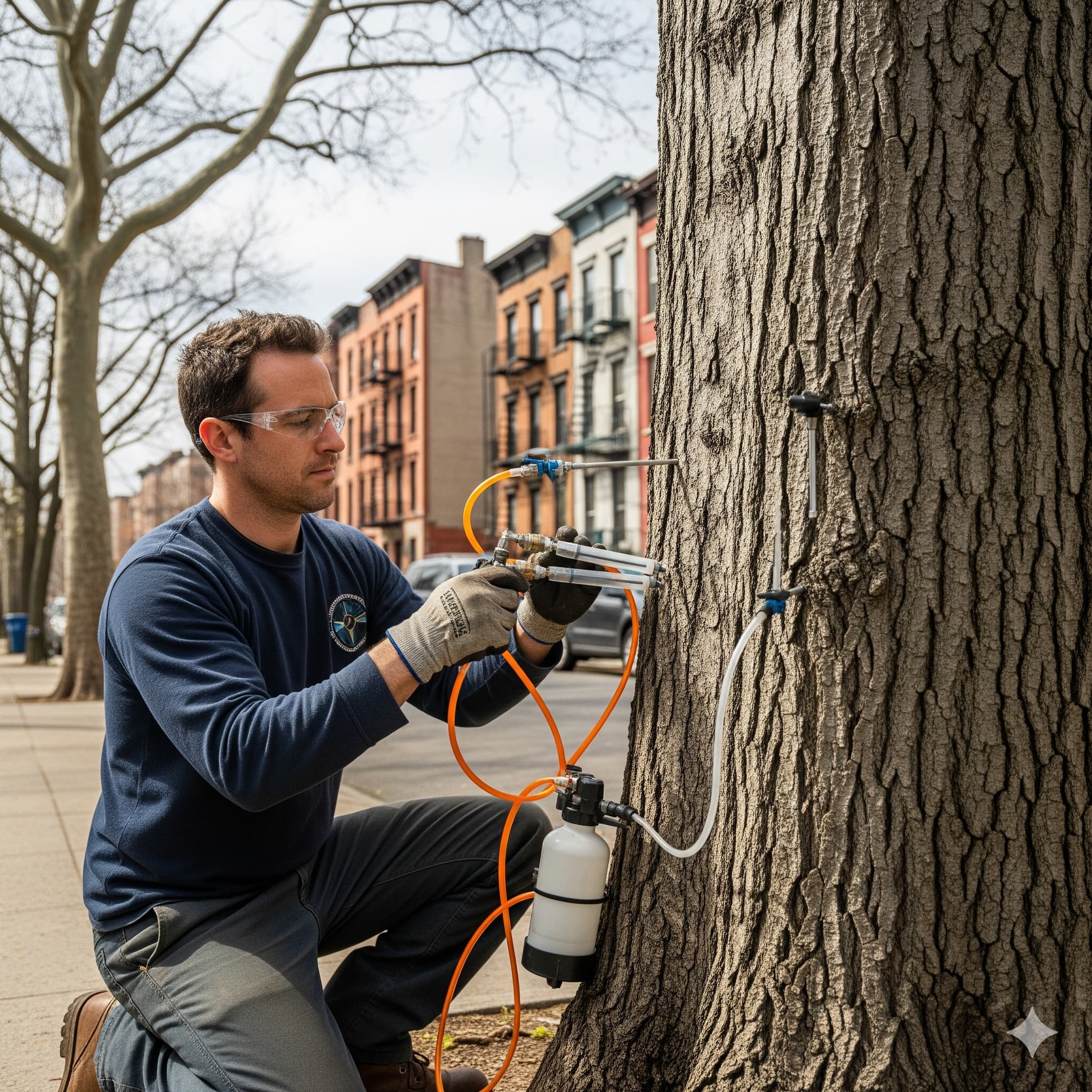
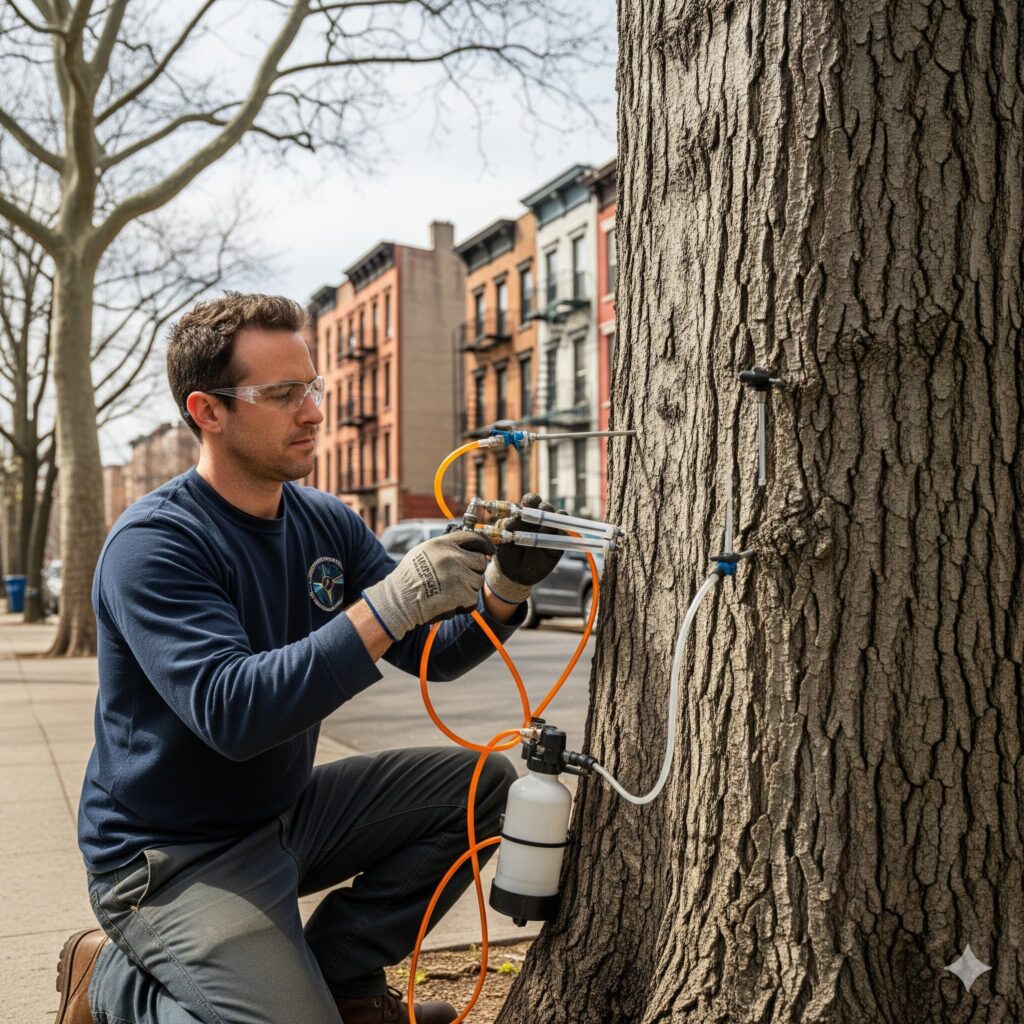
Trunk injection systems provide a method of delivering systemic treatment to the vascular system of the tree, thereby allowing for uniform distribution of the treatment throughout the tree’s canopy. Trunk injection treatment systems are especially useful for the treatment of tall trees, sensitive ecosystems, or locations where spray drift may limit the use of traditional spraying methods. Trunk injection treatments can provide 1-3 years of protection, depending on the material used and the level of disease pressure present.
Pressurized trunk injection systems use hydraulic pressure to push treatment material past the natural resistance of the tree and provide uniform distribution of the treatment throughout the crown of the tree. Trunk injection treatments are usually timed to coincide with periods of active sap flow, either in the spring or fall, depending on the type of material used and the desired distribution of the treatment. Material used for trunk injection treatment can be retained in the roots of the tree over the course of the winter, making fall treatments suitable for some systemic materials.
Specific Disease Application
Dutch Elm Disease Prevention
Trees treated for Dutch elm disease prevention using trunk injection fungicides containing propiconazole or other systemic fungicides create a protective barrier in the tree tissues that prevents the Dutch elm fungus from infecting the tree when the beetle vector introduces the pathogen. Trunk injection fungicides are the preferred method for preventing Dutch elm disease in healthy elms, as it provides the highest level of protection.
Oak Wilt Prevention
Trunk-injected fungicides containing systemic fungicides are used similarly to Dutch elm disease prevention in oak wilt prevention in susceptible oak species. The goal of the treatment is to create a protective layer of fungicide in the tree tissues before infection occurs.
Treatment of Bacterial Leaf Scorch
Treatment of bacterial leaf scorch involves injecting antibiotic materials such as oxytetracycline or other approved antibiotics through trunk injection systems. Antibiotics are unable to cure bacterial diseases, but they can slow down the rate of symptom expression and extend the life of the tree. Repeated annual treatments are needed to maintain suppression of symptoms and are most cost-effective for high-value specimen trees.
Protocols for Antimicrobial Treatments
Management of Bacterial Plant Pathogens
Antimicrobial treatments for bacterial diseases of trees (such as bacterial leaf scorch, fire blight, etc.) are very different from antimicrobial treatments for fungal diseases. These treatments involve the use of antibiotics (such as oxytetracycline, streptomycin) delivered through injection systems to the site of infection within the tree tissues.
Resistant Management Considerations
Resistance to antibiotics in bacterial plant pathogens is becoming an increasingly serious problem for the management of tree diseases and is dependent on proper application protocols to maximize treatment effectiveness. Rotating between different classes of antibiotics, using combinations of antibiotics, and integrating antimicrobial treatments with cultural controls are all strategies that can minimize selective pressure for resistant strains of bacteria and preserve the effectiveness of the therapy.
Adaptive Management for Resistance
Professional management programs continually monitor the bacterial population(s) causing the disease and adjust treatment protocols based on resistance patterns found in the local pathogen population. By doing so, treatment remains effective while minimizing selective pressure for resistant strains of bacteria.
Cultural Disease Management
Modification of Environmental Conditions
Cultural disease management addresses the modification of environmental conditions that foster disease development and supports tree health and innate resistance. Cultural practices such as improving air movement through strategic pruning, controlling soil moisture to prevent root rots, and adjusting nutrient availability to stimulate innate resistance provide basic support for chemical treatments.
Disease Sanitation
Removal of Pathogen Sources
Disease sanitation programs remove pathogen sources contributing to recurring infection cycles, reducing the amount of chemical treatments required and maximizing the effectiveness of long-term disease management. Removing fallen leaves reduces the number of sites for many foliar pathogens to survive the winter, and removing branches that harbor infection sites reduces the amount of spores produced for continued spread.
Timing of Treatment
Seasonal Considerations for Effective Treatment
To effectively manage disease, the timing of treatment must be carefully coordinated with the phenological stage of the tree, the life cycle of the pathogen, and environmental conditions influencing both the development of the disease and the effectiveness of the treatment. Spring treatments are often applied at the beginning of the season when the tree is actively growing, and the pathogens are developing. Summer treatments are focused on protecting newly emerging growth during the period of peak disease pressure. Weather conditions during and following treatment applications are critical for determining the success of the treatment. Chemical applications must occur during the correct range of temperatures and humidity levels for optimal absorption and activity of the product. Avoiding excessive heat during application to prevent phytotoxicity and waiting until rain-free intervals following application to assure that the product remains on the surface of the leaf or stem for sufficient time for absorption or infection prevention.
Monitoring Treatment Effectiveness
Adjustment of Treatment Protocols Based on Response and Changes in Disease Pressure
All disease treatment programs include ongoing monitoring to assess the response of the tree to treatment and to adjust treatment protocols as necessary based on the effectiveness of the treatment and changes in disease pressure. Documentation of reduced symptoms, protected new growth, and enhanced overall tree health following treatment helps document successful disease suppression.
Development of Long-Term Treatment Programs
Evolving Disease Treatment Programs Over Time
All disease treatment programs should evolve based on the results of previous treatments, the evolution of disease pressures, and advances in technology that improve the effectiveness and/or reduce the environmental impact of treatment options. Treatment history records from multi-year treatment programs can help identify trends that inform future treatment decisions and help allocate resources to maximize benefits.
Combining Disease Treatment with Comprehensive Tree Care
Disease treatment programs will ultimately be most effective when combined with a complete tree care program that addresses the nutritional needs of the tree, pruning, soil management, stress reduction, and direct disease control. A complete tree care program creates conditions that support natural resistance to disease, while allowing chemical treatments to work within healthy tree systems.
Tree Care Pros West New York offers comprehensive tree care programs that integrate disease treatment with other arboriculture services to provide total support for tree health in West New York’s urban forest. Our programs recognize that disease problems often result from underlying tree health issues that require a broader intervention for sustained solutions.
Coordination of disease treatment with the findings of tree health assessments enables targeted treatments to address specific tree needs while enhancing long-term resistance to potential future disease threats. In addition to offering a more cost-effective solution than reactive treatments, our programs are more environmentally friendly while producing better outcomes for West New York’s valuable urban tree assets across the City’s diverse neighborhoods.
LATEST POSTS