
Menu
Tree Health Assessment to Prepare for Heat Waves or Droughts
Tree Health Assessment West New York
Residents in West New York are facing increasingly severe challenges as climate change continues to exacerbate extreme weather events; a growing number of residents will be at risk of losing their valuable trees during extreme heat waves or drought conditions. A professional tree health assessment will help you identify potential weaknesses of your trees and provide you with a plan to implement protective measures against future extreme weather events. Knowing the effects of heat and drought on urban trees located in Boulevard East and throughout Hudson County is critical to enable homeowners to make pre-emptive decisions to protect their investment in trees while also preserving the critical canopy cover needed in our communities.
Understanding Heat and Drought Stress in Urban Trees
How Extreme Weather Affects Tree Biology
When you evaluate a tree’s response to heat and drought, there is no single factor to assess; rather, there are several factors that interact simultaneously to create complex tree responses.
The temperature increases associated with heat waves elevate tree water demands through increased transpiration, while limiting the ability of trees to carry out photosynthesis at maximum rates. At temperatures above 85-90 °F, many tree species are exposed to sufficient metabolic stress to disrupt their natural defenses against pests and diseases and to compromise their structural integrity.
Asphalt and concrete surfaces are used extensively in West New York, and these materials contribute to urban heat islands by raising local air temperatures by 7-10 °F. Trees located in areas adjacent to heavy-use parks (e.g., James J. Braddock Park), heavy hardscape areas, and roads are subject to greater thermal stress, and soil temperatures in these areas may reach as high as 140 °F. As a result, the heat lesions that occur under such conditions, the reduced root function, and the increased susceptibility to secondary problems (insect infestations and disease development) can be detrimental to tree survival.
Trees respond to prolonged periods of drought through physiological responses that negatively affect both the health and structural integrity of the tree. Prolonged drought conditions lead to a number of physiological responses in trees. Initially, small-diameter feeder roots begin to die due to inadequate soil moisture, thereby reducing the tree’s ability to absorb water and nutrients. Continued drought leads to the failure of larger structural roots that can compromise the tree’s long-term survival.
While all trees will exhibit some degree of drought stress, young trees tend to exhibit higher levels of drought stress than mature trees because young trees do not possess the large diameter and extensive root systems required to access deeper layers of soil moisture. Mature trees may still exhibit reduced drought tolerance if they have declining root efficiency, which can be caused by a variety of factors, including old age and/or disease.
Properties within West New York that contain a mix of tree species and ages will require species-specific assessments to determine the level of drought stress for each tree. For example, properties along Bergenline Avenue may contain a variety of tree species and ages, and each tree must be assessed individually to determine its level of drought stress.
Components of a Professional Tree Health Assessment
Visual Inspection Protocols
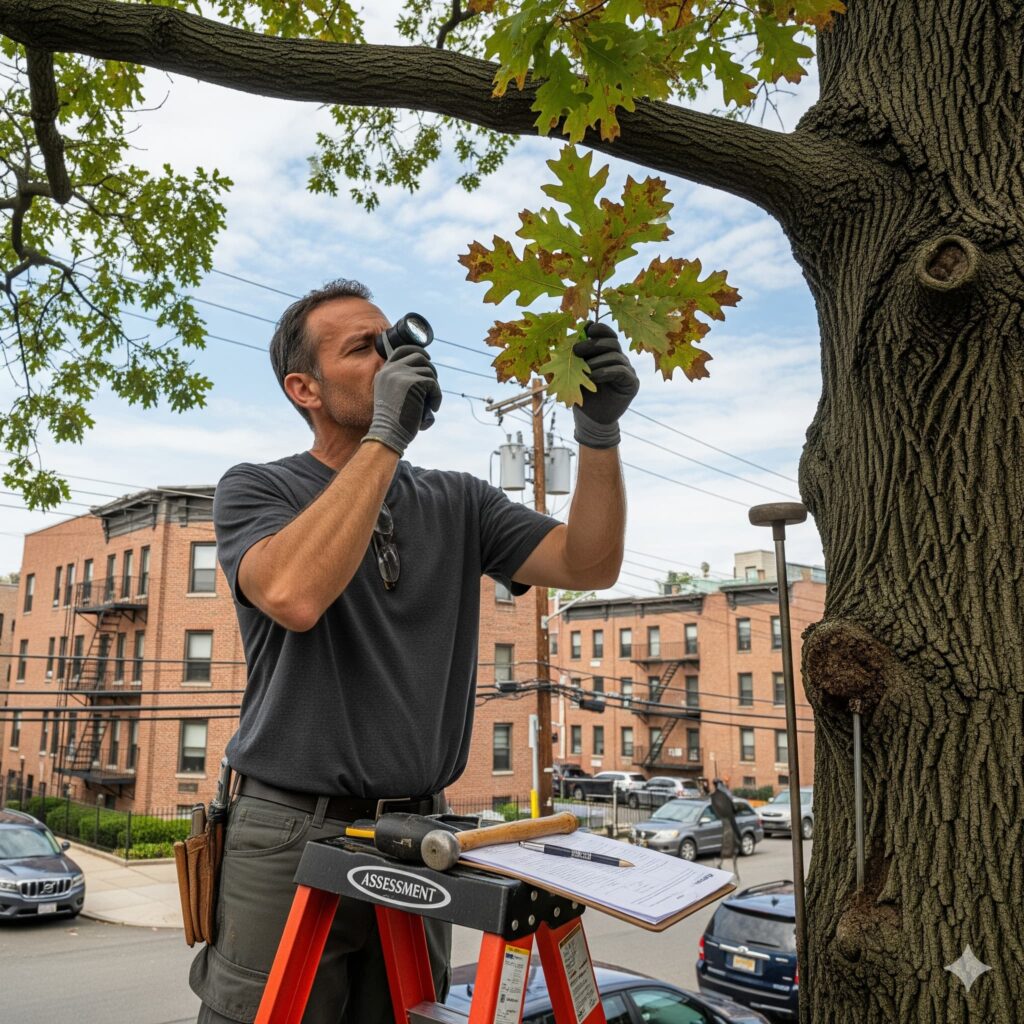
A thorough tree health assessment is initiated with a systematic visual evaluation of all aspects of the tree, from roots to crown. Certified arborists inspect the area around the root flare for signs of decay, fungal growth, or physical damage that could indicate a decline in the tree’s health. Visual inspections of trunks focus on the bark condition, presence of cracks, cavities, or unusual growths that could suggest internal problems or stress responses.
Crown evaluations are conducted to evaluate the color, size, and density of leaves to assess the tree’s vigor and stress level. Certified arborists look for initial symptoms of stress, such as leaf scorch, premature leaf drop, reduced leaf size, or abnormal branching patterns. Such symptoms are often indicative of stress responses before apparent distress.
Advanced Diagnostic Tools
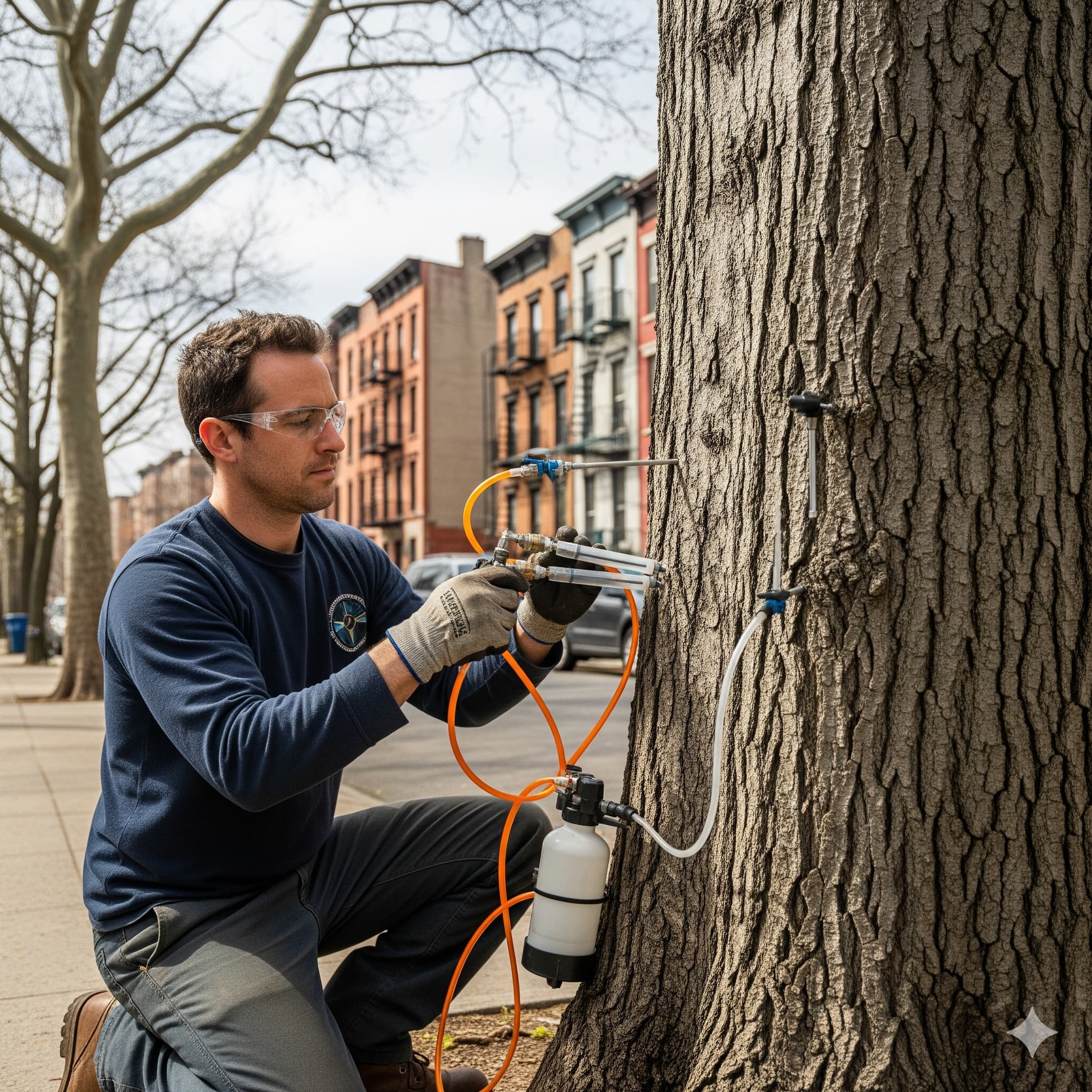
Some tree health assessments may employ specialized diagnostic tools to gain insight into internal tree conditions. Resistograph testing evaluates wood density throughout the cross-section of the trunk to identify possible decay or cavity formation that may not be evident through visual examination. Information obtained from resistograph testing is important to assess structural integrity and to determine whether a tree can withstand extreme weather stresses.
Soil analyses provide insights into growing conditions that directly impact tree health and drought tolerance. Analyzing soil samples will reveal soil compaction levels, drainage characteristics, available nutrients, and soil pH levels that influence root development and water uptake efficiency. Tree Care Pros West New York employs various diagnostic tools to gain a comprehensive understanding of individual tree conditions and stress patterns.
Factors Contributing to Heat and Drought Vulnerability
Species-specific Stress Tolerance
Different tree species exhibit varying tolerance to heat and drought stress, which is why it is so important to identify the species of the tree being evaluated for heat and drought stress. Native tree species, in general, are more tolerant to heat and drought stress than non-native species since they have developed adaptations to local climate conditions. However, even native species are not immune to the negative effects of extreme heat and drought.
For example, red oaks, sugar maples, and American elms are common throughout West New York and exhibit different stress responses and recovery patterns. Recognizing these species-specific differences enables targeted assessment methods that identify which trees need immediate attention and which trees are more resilient to the negative effects of heat and drought stress.
Site Conditions
Factors related to site conditions play a significant role in the level of heat and drought stress experienced by individual trees. Trees growing in compacted soils, restricted root zones, or areas with poor drainage experience elevated levels of stress during extreme heat and drought events. Urban site conditions, such as proximity to pavement, building foundations, and utility lines, further add to the challenges experienced by trees in this environment.
Evaluation of Microclimates
Microclimates refer to the unique combination of environmental factors that exist at a given location. Evaluation of microclimates involves assessing factors such as sunlight exposure, wind direction, reflected heat from nearby buildings or pavement, and competition from adjacent vegetation. Trees growing in parking lots or areas with extensive hardscaping experience greater stress than trees growing in natural environments. The microclimates found in Donnelly Memorial Park vary among different locations within the park, and therefore, the stress experienced by trees in these areas varies.
Early Warning Signs and Symptoms
Stress Response in Foliage
Visible signs of heat and drought stress in trees are most commonly seen as changes in foliage. Symptoms of heat and drought stress include wilted or curled leaves, brown or yellow leaf margins, and/or premature defoliation. These symptoms may be reversible and may resolve once the tree experiences cooler temperatures and adequate rainfall. As stress progresses, these symptoms may continue to progress and may eventually result in complete defoliation.
Color, size, and density of leaves provide clues to the level of stress experienced by a tree, and therefore to the tree’s overall vigor. Pale or yellowish colored leaves, smaller than normal leaves, or sparsely foliated crowns may indicate that the tree is experiencing stress. Certified arborists can differentiate between acute stress responses and chronic declines in tree vigor.
Physical Changes Due to Structural Stress
Recurring exposure to heat and drought can cause structural changes in trees that are identifiable before collapse. Dieback of branches from the ends of branches towards the main stem of the tree is indicative of severe water stress, which may compromise the structural integrity of the tree. Cracks, splits, or peels of bark are indicative of thermal injury that provides pathways for insects and pathogens to enter the tree.
Changes in the root system may include death of surface roots, decreased production of new fine roots, or altered root distribution patterns. Although changes to the root system are generally not observable, certified arborists may be able to recognize indirect evidence of root system decline, such as altered soil conditions, fungal growth patterns, or above-ground symptoms.
Risk Assessment and Prioritization
Evaluation of Immediate Risks
A certified arborist conducting a tree health assessment evaluates the risks associated with each tree and prioritizes them according to the urgency of action needed to protect people, property, and the tree itself. Trees exhibiting symptoms of advanced stress, structural compromise, or unstable branches represent a high priority for action, as they may fail under extreme weather conditions.
In addition to the condition of the tree, certified arborists also take into account the potential consequences of failure of the tree, i.e., potential damage to buildings, vehicles, pedestrians, etc. In general, a moderately stressed tree with branches overhanging a busy street may be considered higher risk than a highly stressed tree in an open area with little chance of causing damage upon failure.
Development of Long-term Vulnerability Plans
Certified arborists assess the vulnerability of trees to heat and drought stress and develop plans to protect the trees from continued degradation of their health and structural integrity. Trees that are experiencing moderate levels of stress may be expected to survive current conditions, but may be expected to experience increased stress as extreme weather events become more frequent and intense as a result of climate change.
Trees experiencing moderate levels of stress may benefit from early intervention to promote their resiliency and extend their useful life. Often, the costs associated with providing preventive care for vulnerable trees are less than the costs of providing preventive care for vulnerable trees are less than the costs of responding to emergencies resulting from trees reaching critical levels of stress.
Planning for Future Replacements
The data collected from the assessment process provides valuable information to assist property owners in developing plans for future replacements of trees that may have limited resiliency to climate-related stresses. The assessment data can help property owners decide which trees to invest in and how to invest in them to ensure the preservation of the existing tree investment and to meet future environmental objectives.
Examples of strategies for promoting resiliency include replacing susceptible species with species that are more likely to tolerate extreme heat and drought, thinning out densely grown canopies to enhance airflow and reduce shading, pruning trees to enhance their form and structure, and using mulch and irrigation systems to support trees during times of stress.
Preventative Care Methods
Methods to Improve Soil and Root Zone
Certified arborists often discover soil conditions that restrict a tree’s tolerance to extreme heat and drought stress and may recommend improvements to those conditions. Compacted soils may be improved by aerating the soil, incorporating organic matter into the soil, and applying mulches to the soil surface. These actions can improve the functionality of a tree’s root system and its access to water.
Expanding the root zone of a tree through strategic landscape modification may provide additional space for root growth and may enhance a tree’s ability to survive extreme drought conditions. Removing competing vegetation, modifying irrigation patterns, and adjusting the layout of hard-surface features in a landscape may create a more suitable root-growth environment for trees.
Methods for Improving Water Availability
Certified arborists provide irrigation recommendations for individual trees, taking into account the species’ water requirements, the soil conditions, and the microclimate of the tree. Frequent, shallow watering creates a dependence on supplemental watering that can decrease a tree’s ability to tolerate drought stress, while infrequent, deep watering promotes the development of deep roots that improve a tree’s drought tolerance.
Certified arborists work with property owners to plan and implement effective irrigation systems that support trees during times of extreme heat and drought, and these systems can be designed to optimize the use of water resources.
Recommendations for Species Selection and Replacement Planning
Recommendations for Climate-resistant Species
The data collected from a tree health assessment can inform property owners regarding the selection of replacement species that will better withstand projected climate conditions. Native tree species that have been selected based on local climate conditions often perform better in terms of heat and drought tolerance, but may not always be available.
Certified arborists can assist property owners in selecting replacement species based on the results of the assessment, site conditions, and projected climate trends. Planting a variety of species can reduce the risk of losses due to pests and tree diseases that may target specific species, and can ensure that some trees will continue to provide shade and aesthetic benefits even when extreme weather conditions occur.
Planning for Succession
Certified arborists assist property owners in planning for the succession of trees in order to maintain a continuous canopy and improve the overall climate-resistance of the tree population. Replacing trees on a gradual basis allows property owners to distribute the costs of replacement over a period of time and allows mature trees to continue to provide benefits to the community until the replacement trees are established.
Scheduling assessments at the correct time to coincide with the timing of replacement plans maximizes the chances of successful establishment of new trees. Fall and early spring are ideal planting seasons, and the assessment schedule should be planned to allow sufficient time for replacement planning and procurement before the onset of extreme weather seasons.
Working with Professional Arborists
Selection of a Qualified Professional
A professional tree health assessment requires the services of a certified arborist who has received specific training in the evaluation of tree stress responses and climate adaptation strategies. Certification by the International Society of Arboriculture (ISA) assures that the professional has received proper training in the evaluation of tree stress responses and the application of tree care strategies to mitigate those responses. Additionally, certification in Tree Risk Assessment Qualification (TRAQ) demonstrates a specialized knowledge of tree risk assessment and evaluation techniques.
Experience working with urban trees and in the local climate region adds value to the services provided by a certified arborist. Ongoing education and participation in continuing education courses on the impacts of climate change and adaptation strategies for urban forests demonstrates a commitment to providing the most up-to-date knowledge and techniques to protect the investment in urban trees.
Timing of Assessments and Follow-up Evaluations
To accurately diagnose the extent of stress experienced by a tree, assessments should be scheduled to coincide with the typical cycle of the tree and to avoid adverse weather conditions that can mask symptoms of stress. Spring assessments made before leaf emergence allow for a thorough evaluation of the structural integrity of the tree, while summer assessments provide insight into the stress responses exhibited by the tree and the condition of the foliage. Annual assessments are recommended for trees that are high risk, while healthy trees may require evaluation every 2-3 years.
Follow-up evaluations are recommended to monitor the effectiveness of treatments and to document changes in the condition of the tree over time. This type of monitoring allows for the implementation of adaptive management practices that adjust the type and frequency of treatments based on the response of the tree to previous treatments and the changing environmental conditions.
Conducting Proactive Tree Health Assessments Protects West New York’s Urban Forest
West New York’s urban forest comprises thousands of trees that provide essential environmental and aesthetic benefits to the community. Proactive tree health assessments provide the means for protecting these trees from increasingly severe heat waves and drought events. By identifying potential vulnerabilities in trees prior to the occurrence of extreme weather events, property owners can implement timely, cost-effective solutions that minimize the loss of tree assets and maximize the benefits derived from trees.
By utilizing certified arborists to conduct assessments, property owners can rely on professionals to provide recommendations that address both short-term needs and long-term climate resiliency. As the urban forest continues to evolve in response to changing climate conditions, proactive tree health assessments will provide the foundation for developing and implementing sustainable urban forestry practices that will benefit generations of residents, visitors, and businesses in West New York.
LATEST POSTS