Menu
Does Insurance Cover Emergency Tree Service in West New York?
Emergency Tree Service West New York
When storms hit West New YorK residents are faced with important, time-sensitive choices regarding emergency tree service needs and their expected insurance coverage. Knowing what is covered by a homeowner’s insurance policy as opposed to what homeowners will need to cover from their own pocket will assist in helping homeowners on Boulevard East and throughout Hudson County prepare for an emergency involving trees while minimizing unexpected costs. The urban density surrounding James J. Braddock Park creates challenges affecting both emergency response requirements and the potential outcome of claims submitted through the homeowner’s insurance policy.
Understanding Emergency Tree Service Situations
What Constitutes a Tree Emergency
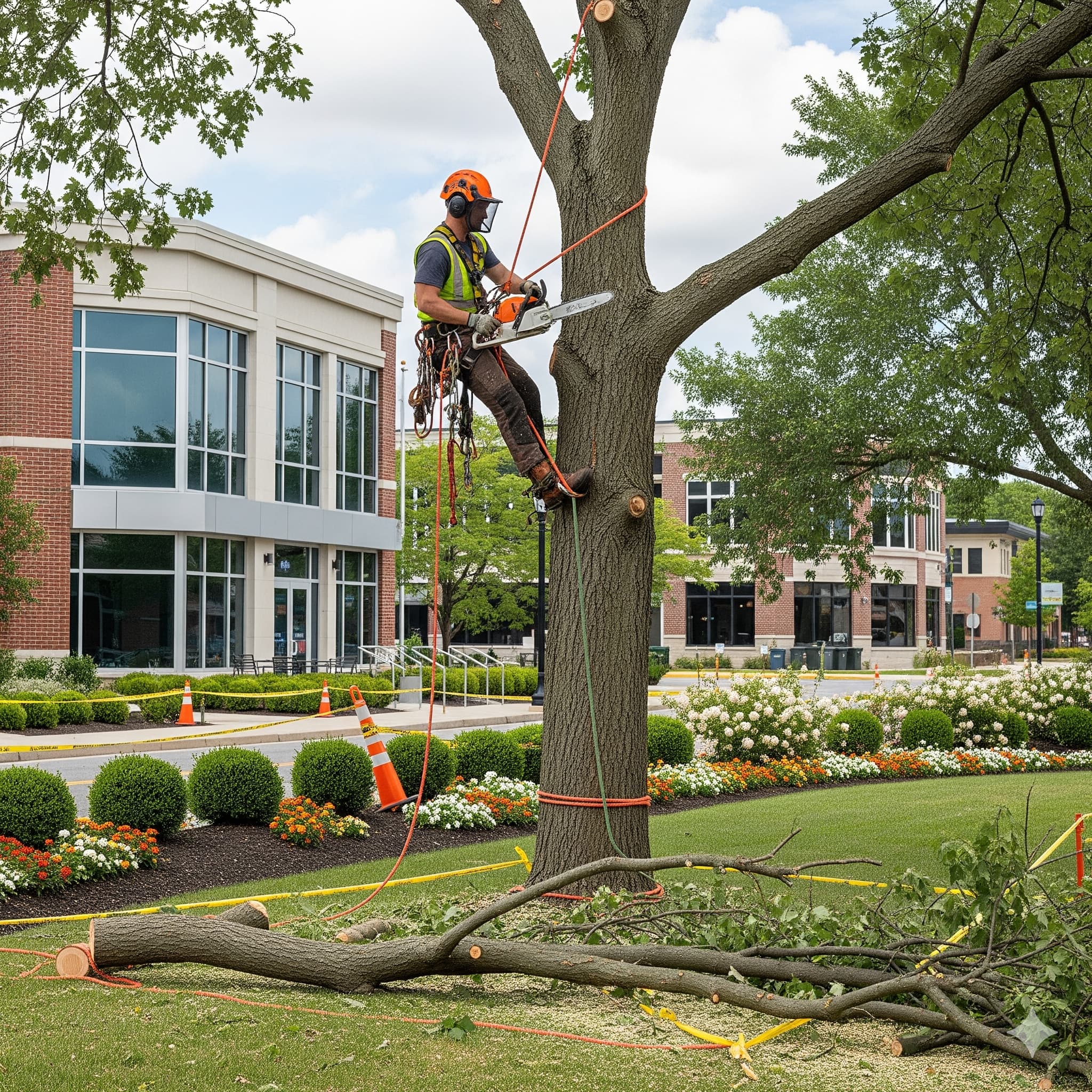
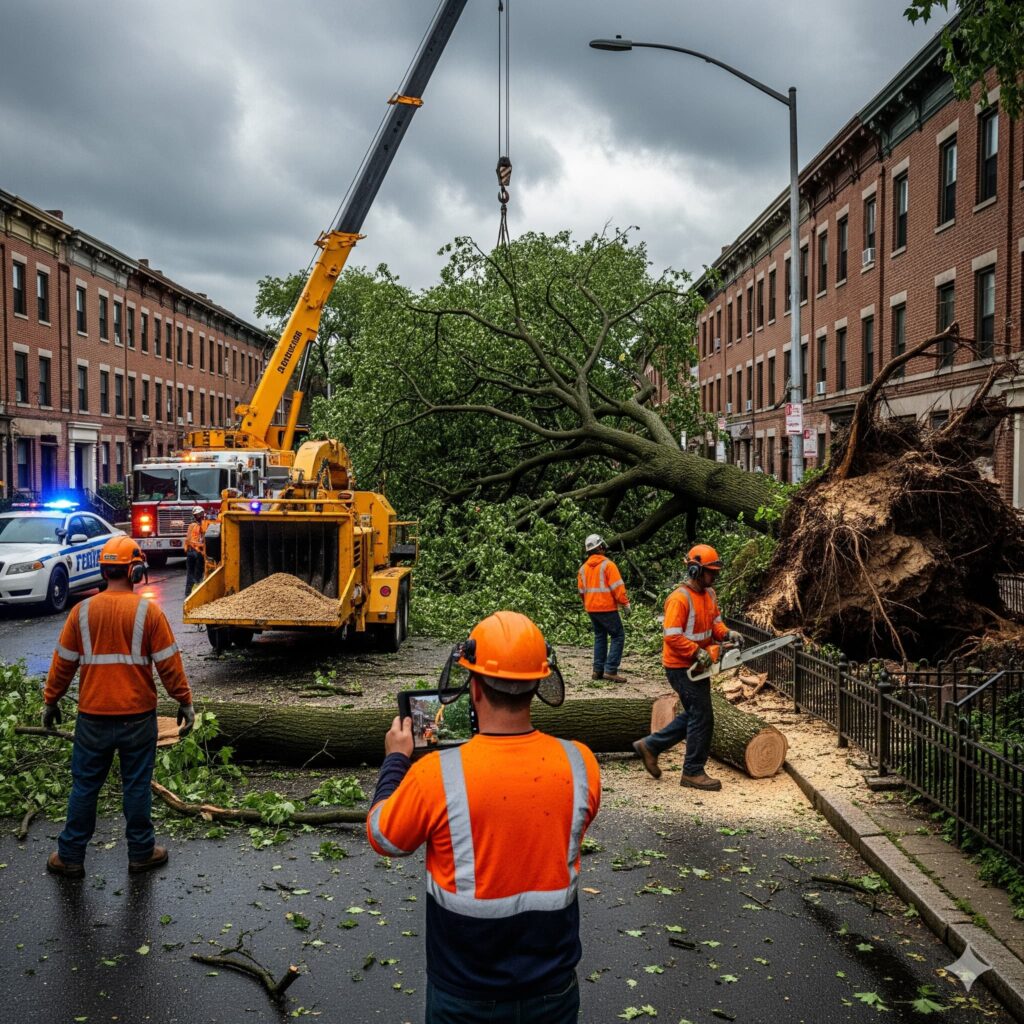
Trees are considered an emergency situation in West New York when there is a direct safety issue that will need to be resolved within a few hours, as opposed to days. The most common emergency tree issues in West New York involve a tree or branch falling onto a house, blocking a driveway or sidewalk, causing electrical-line damage, or being on the verge of collapsing. In addition, because of the high density of houses in many parts of West New York, properties are at higher risk of emergency tree situations since mature trees that grow next to houses do not have enough room to naturally fall in a safe manner.
In addition to the previously mentioned emergency tree issues, emergency tree services also include:
- Trees leaning against structures due to damage to the root systems
- Large branches hanging from trees due to partial failure
- Trees that are blocking emergency vehicles from accessing the street
Tree Care Pros West New York can respond to emergencies on a 24-hour basis, and we generally arrive at the site of the emergency within hours of your call.
Prioritization of Emergency Response
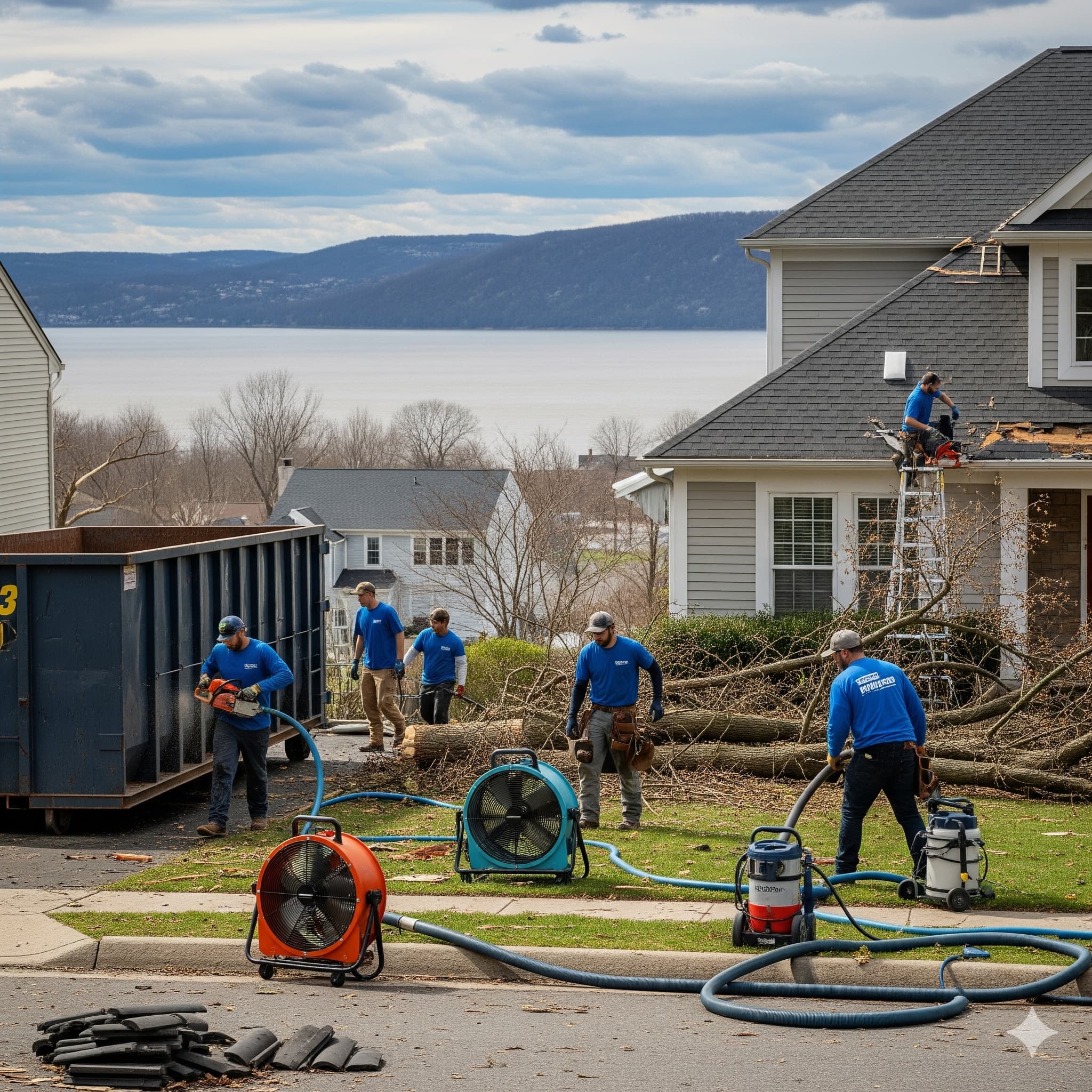
The initial focus of professional emergency tree services is the removal of any immediate hazards and the stabilization of the area. Once this is done, the focus shifts to protecting the structure(s) from further damage. At this point, it may be necessary to remove branches or sections of trees from roofs, remove obstructions from sidewalks and driveways, or stabilize a partially fallen tree so it does not continue to fall in the future.
Additionally, emergency services work closely with utilities (i.e., electric, gas, water, and sewage, etc.) when trees damage power lines or telecommunications infrastructure. Because of the density of utilities in West New York, coordinating with utilities to restore services while maintaining safety is a time-consuming process. As such, emergency services understand how to handle these types of coordination requests and have established relationships with various utility providers to facilitate a faster resolution to these situations.
Insurance Coverage for Homeowner Policyholders
Coverage for Emergency Tree Removal Under Homeowners Policies
Typically, under a homeowner policy, emergency tree removal is covered when a tree falls and causes damage to the insured’s dwelling and/or its attached structures, as well as to other structures that are part of the dwelling and/or located on the premises. Perils covered by homeowners’ policies include windstorms, ice storms, lightning strikes, fire, explosions, aircraft impact, vehicle collision caused by non-resident drivers, vandalism, and theft. When a tree falls due to a covered peril and causes damage to the insured’s dwelling, garage, shed, fence, etc., the policy typically covers both the repair of the damage to the structure and the removal of the tree.
In addition to covering damage to the insured’s dwelling and/or its attached structures, some policies cover tree removal when fallen trees block a driveway, thereby making a vehicle unable to enter the driveway or block a main walkway, which is needed to access the property.
There are several restrictions regarding the coverage of tree removal under a homeowner’s policy:
- First, the tree must have fallen due to a covered peril (e.g., wind, ice, lightning, etc.).
- Second, the tree must have caused damage to an insured structure.
- Third, the tree must have fallen directly onto an insured structure.
- Fourth, the tree must have been removed in the same year that it fell.
- Finally, the removal must have been done by a licensed contractor.
Limitations on Tree Removal Coverage Under Homeowners Policies
Almost all homeowner’s policies limit the amount of money that can be spent to remove a tree. Typically, the limit ranges from 5 percent of the amount of the dwelling coverage to $2,500 per tree. For example, if the dwelling coverage is $200,000, then the maximum that can be spent to remove one tree is $10,000 ($200,000 x .05), but no more than $1,000 for each tree ($200,000 / 200 = $1,000). While these limits are usually sufficient to cover the cost of removing a small tree that fell due to a covered peril, they may not be enough to cover the cost of removing a larger tree that requires a crane or extensive rigging.
Insured Structures
For a homeowner policy to pay for the removal of a tree that fell due to a covered peril, the tree must have damaged an insured structure. Insured structures include the dwelling, detached garage, sheds, fences, etc. Trees that fall in a yard and do not damage a building, fence, etc., will likely not be covered for removal, even if removal is expensive due to the size of the tree or the difficulty of the location.
Neighborhoods in West New York with older trees and densely developed residential areas should take these coverage limitations into consideration when determining if their homeowner policy provides sufficient coverage.
Exclusions from Coverage Under Homeowners Policies
A homeowner’s policy will never cover the cost of removing a dead, diseased, or structurally compromised tree, regardless of how much of a danger it poses. Dead, diseased, or structurally compromised trees are the sole responsibility of the property owner, regardless of the risk they pose.
Excluded coverage also applies to trees that are damaged but not completely fallen as a result of a storm. Even if a tree is clearly in danger of failing and presents a clear safety risk, the property owner is still solely responsible for paying the cost of removal.
Limited Coverage for Gradually Damaged Trees
A homeowner’s policy will exclude coverage for damage to a tree that was gradually damaged by disease, pests, etc. It is also excluded for damage to a tree that was the result of maintenance neglect. Trees that were damaged before a storm, but failed as a result of the storm, may have their failure attributed to pre-existing conditions rather than a covered peril. Therefore, insurance companies may conduct investigations to determine the cause of the tree failure.
This limitation presents a challenge for urban property owners who may not recognize signs of tree decline or understand what is required to properly maintain trees. A professional tree assessment can document the condition of the tree before the storm and provide evidence that the failure was due to the storm damage and not gradual decline, which can support the homeowner’s claim when an emergency arises.
Cost of Emergency Services and Coordination of Insurance Claims
Pricing of Emergency Services
Emergency tree services cost significantly more than routine removal due to the urgency of the situation, the need to respond to the situation outside of normal business hours, and the increased risk associated with the emergency situation. Emergency services may charge a minimum of $1,500 to respond to an emergency, and can range from $5,000 to $8,000 for complicated situations that require the use of a crane or work around damaged structures. Emergency services may also charge additional fees for weekend or holiday responses, depending on the provider.
Several factors affect the price of emergency services, including:
- Access challenges
- Complexity of structural damage
- Involvement of utility lines
- The degree of immediate safety risk
Due to the dense nature of West New York, emergency services responding to emergencies in the neighborhood may be charged more than those in less populated areas due to the limited access for equipment and proximity to important structures requiring added protective measures.
Documentation for Insurance Claims
Professional emergency tree services help homeowners document their insurance claims by providing detailed damage assessments, photos of damage, and written reports detailing work performed. The services are familiar with the insurance companies’ documentation requirements and can provide documentation to support covered portions of the claim and differentiate between covered and uncovered work.
Documenting the details of the emergency is crucial to successfully filing an insurance claim, especially in identifying whether the tree failure was caused by a covered peril or a pre-existing condition. Services responding to emergencies should take photos of the damage before beginning work, document weather conditions, and provide detailed estimates that separate billed work from non-billed clean-up activities.
Examples of Specific Coverage Situations
Damage to Trees During Storms
When a storm damages trees in West New York, insurance coverage will depend on the specifics of the situation and the type of damage to the trees. Generally, trees that blow down due to a windstorm that damage homes, garages, or fences will be fully covered for both the repair of the damaged structure and the removal of the tree. However, trees that fall due to a windstorm but do not damage any structures will typically not be covered for removal, regardless of the cost of removal or the extent of the damage to the lawn and surrounding landscaping.
Ice storms create unique coverage challenges because the damage to trees can result from both the immediate weight of the ice and the subsequent weakening of the tree’s structure. Insurance companies will assess whether the failure occurred during the active storm or after the storm due to delayed structural failure. Homeowners in West New York with mature trees in areas such as Donnelly Memorial Park should document the timing of the storm and the pattern of damage to support their insurance claims.
Liability of Neighbor for Falling Trees
When a neighbor’s tree falls and damages a property in West New York, the typical coverage source for the loss is the homeowner’s insurance policy covering the damaged property, not the neighbor’s insurance policy. This “no-fault” approach recognizes that trees that are damaged in a storm are essentially similar to other forms of storm damage, and therefore require similar insurance coverage. However, if a neighbor fails to properly maintain a tree that is known to be hazardous, they may be held liable for any damage that results from the tree’s failure.
Property owners should keep a record of any hazardous conditions that exist on their neighbor’s property and provide written notice to the neighbor along with photographs documenting the hazardous conditions. This documentation may help establish that a neighbor failed to properly maintain a hazardous tree, which could be used as evidence in a claim for damages resulting from the tree’s failure.
Options for Increasing Insurance Coverage
Enhancing Tree-Related Coverage Under Homeowner Policies
Homeowners can purchase enhancements to their tree-related coverage under their homeowner policies through endorsements or riders that increase the limits for debris removal and/or add coverage for other scenarios. Typically, these endorsements or riders will incur minimal premium increases relative to the enhanced coverage provided.
Enhancements to coverage options may include:
- Restoring landscaping
- Increasing tree removal limits
- Providing temporary living-expense coverage if a tree falls and renders the home uninhabitable
Property owners with mature landscaping in densely populated areas, such as West New York, may find these enhancements beneficial in providing coverage for damage that may be caused to their landscaping by fallen trees.
Best Practices for Filing Insurance Claims
To file a successful insurance claim for damage to a tree and related damage to a home, a property owner should:
- Promptly report the damage to the insurance company.
- Provide detailed written descriptions of the damage, including the timing of the damage, and the measures that were taken to ensure public safety.
- Provide photographs of the damage before commencing clean-up.
- Retain records of all emergency services, temporary repairs, and additional living expenses incurred due to the damage.
Professional emergency tree services can provide valuable documentation to support a homeowner’s insurance claim while resolving the emergency. Working with experienced emergency services can help speed up the claim resolution process and ensure that all aspects of the claim are properly documented to support the homeowner’s claim.
Working with Experienced Emergency Services Providers
It is recommended that homeowners select emergency tree services that have experience working with insurance companies and understanding the nuances of what constitutes covered work and what does not. Emergency services that have worked with multiple insurance companies and understand the documentation requirements of each insurer can provide homeowners with valuable assistance in preparing and submitting their claims. Additionally, experienced emergency services will provide homeowners with detailed estimates of the work that will be performed and provide them with documentation that supports the estimated costs of the work.
Tree Care Pros West New York has established relationships with insurance adjusters and understands the documentation requirements of various insurance companies. This expertise will aid in the timely resolution of the homeowner’s insurance claim and ensure that the homeowner receives the coverage they deserve.
Caution Against Hiring Storm Chasers
Homeowners should exercise caution when hiring emergency tree services that solicit business door-to-door in the aftermath of a storm. These “storm chasers” may not possess the proper licensure, insurance, or local presence to provide reliable and quality emergency services. They may also not provide adequate documentation of the work they perform, and may abandon the job once payment is made. Furthermore, the storm chaser may perform substandard work, which can lead to additional problems and complications with the homeowner’s insurance claim.
Professional emergency services maintain a local presence, possess the necessary licenses and insurance, provide references, maintain equipment and personnel ready for emergency response, and provide warranties and follow-up services. Before hiring emergency tree services, even in emergencies, verify the licensure, insurance, and local reputation of the service provider.
Strategies for Planning and Preventive Action
Performing proactive tree-risk assessments and performing regular maintenance on trees reduces the likelihood of needing emergency tree services and decreases the number of insurance claims filed for tree-related damage. Arborists can identify hazardous trees before they fail, and allow property owners to plan for the removal of the hazardous trees during favorable weather conditions, thus reducing the cost of the removal to emergency pricing levels.
Development of emergency response plans that include selected professional emergency tree services that are available 24 hours per day, the contact information for the homeowner’s insurance company, and documentation procedures for documenting damage to trees and related damage to structures can help property owners make informed decisions during emergencies while maximizing their insurance coverage and minimizing their financial losses.
Regularly maintaining trees and conducting risk assessments protects property owners in West New York from the financial consequences of hazardous trees, while ensuring thatemergenciess are handled properly and in accordance with the terms of the property owner’s insurance policy. Professional emergency services provide critical safety response while working within an insurance framework to minimize property-owner costs and maximize the value of insurance coverage for valid storm-damage claims.
LATEST POSTS